
Arugam Bay travel guide: surf, wildlife and where to stay
Travellers chasing consistent surf, laid-back days and easy wildlife access will find Arugam Bay on Sri Lanka's east coast. This guide covers when to visit, how to reach the bay, what to do beyond the waves and which area suits your travel style.
Why go
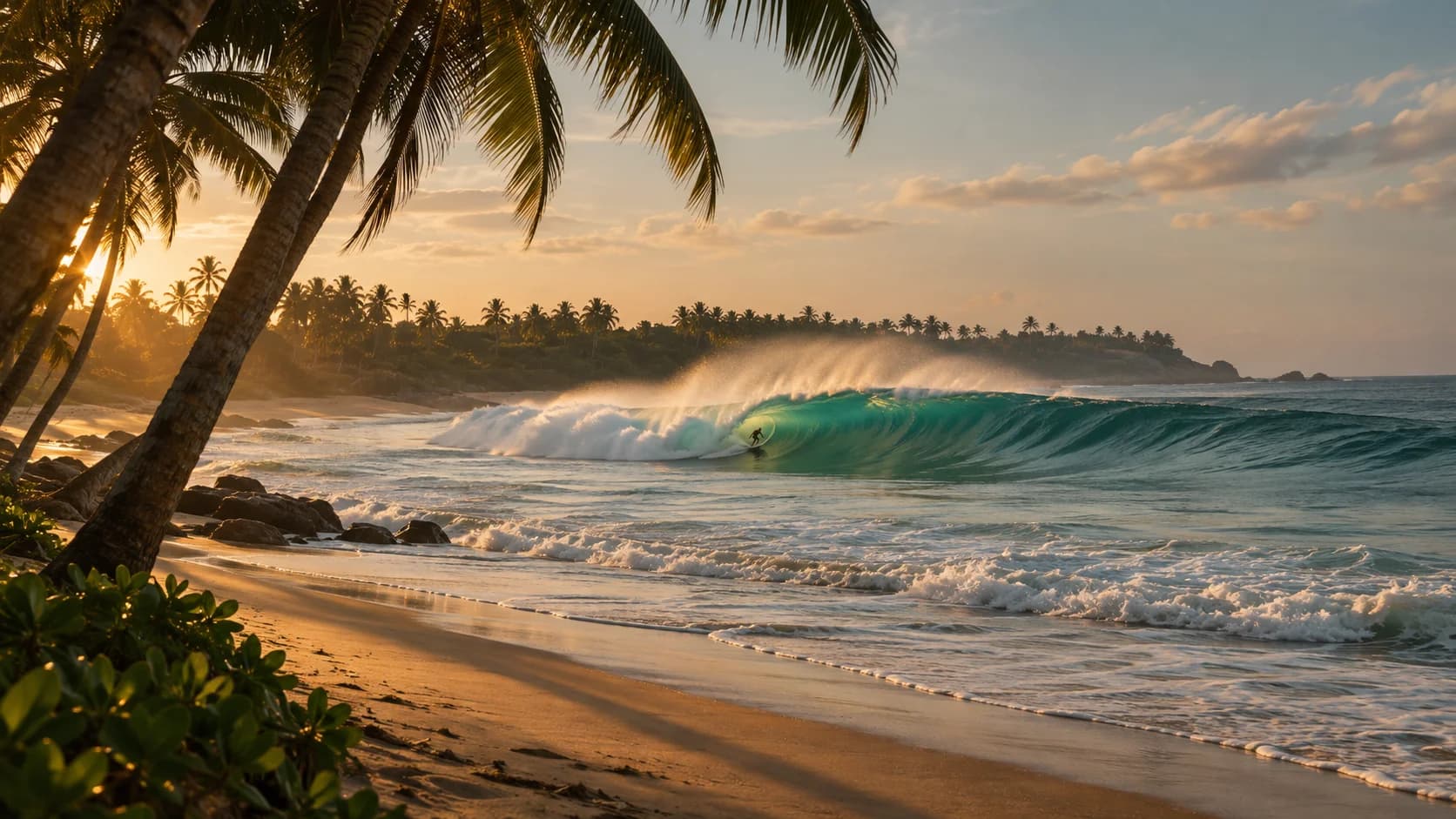
Arugam Bay sits on the dry east coast and is known internationally for its right-hand point break at Main Point. The bay also gives quick access to two national parks and a string of quieter beaches. The atmosphere stays low-key even in peak season because most visitors come for the surf and the surrounding nature rather than nightlife.
When to go
The main surf season runs from April to October when the southwest monsoon brings consistent swell and offshore winds. November to March is calmer with smaller waves and fewer visitors; accommodation prices often drop. Rainfall is generally low year round but the inter-monsoon periods in April and October can bring brief heavy showers. Check the Sri Lanka Tourism Promotion Bureau for current weather patterns before you book.
How to get there
Most international arrivals land at Bandaranaike International Airport near Colombo. From Colombo you can take a direct bus to Pottuvil (about seven to eight hours), hire a private driver (six to seven hours depending on traffic), or fly to Batticaloa domestic airport then drive two hours north. The domestic flight option is fastest but schedules change seasonally; confirm times with the airline or your travel planner. The Sri Lanka Tourism Promotion Bureau lists current transport options on its website.
Getting around
The bay stretches several kilometres along the coast road so tuk-tuks are the default for short hops between surf breaks, cafes and guesthouses. Many visitors rent bicycles or scooters for independence; roads are flat and traffic is light outside Pottuvil town. For national park safaris you will need a 4×4 with a driver; park entry fees and vehicle hire are separate costs set by the Department of Wildlife Conservation.
Things to do
Surfing is the primary draw. Main Point works best on a mid to high tide with a south swell. Whiskey Point and Peanut Farm suit beginners and longboarders. Elephant Rock at the southern end offers a mellow wave and a short climb for sunset views. Beyond surfing, Kumana National Park is forty minutes south and known for birdlife and occasional leopard sightings. Lahugala Kitulana National Park to the west attracts elephant herds in the dry season. Pottuvil Lagoon tours by canoe show mangrove ecosystems and crocodiles at a distance. Day trips to the ancient Buddhist site of Muhudu Maha Viharaya or the Hindu shrine at Okanda add cultural context. Always follow park rules and keep a respectful distance from wildlife.
Where to stay, by area
Main Point area puts you steps from the famous break and the highest concentration of cafes and surf shops. It suits travellers who want to wake up and paddle out. Whiskey Point area to the north is quieter with a scattering of guesthouses and a more relaxed rhythm; the wave here is forgiving for learners. Pottuvil town inland has budget rooms, local eateries and the main bus stand; it is practical for early park departures but adds a tuk-tuk ride to the beach. The stretch toward Panama and Okanda offers isolated eco-lodges and camping for those prioritising solitude and park access over evening options. Choose based on whether surf convenience, quiet, or park proximity matters most.
How long to stay
Five to seven days lets you surf multiple breaks, do one full-day safari and absorb the rhythm without rushing. Two weeks is common for surfers chasing swell windows. If you are combining Arugam Bay with the Cultural Triangle or the hill country, allow at least three nights as a coastal pause on a broader Sri Lanka circuit. The 7 day Sri Lanka itinerary culture hills coast page shows how the bay fits into a week-long route.
Practical tips
Sri Lanka requires an Electronic Travel Authorization for most nationalities; apply via the official ETA website before arrival or on arrival at the airport. Fees and processing times vary by passport so check the current rules for your nationality. Dress modestly when visiting temples or walking through Muslim villages; shoulders and knees should be covered. The Sri Lanka etiquette guide for visitors explains temple protocols and cultural norms in detail. Tap water is not potable; use filtered or bottled water. Power cuts can occur so a power bank is useful. ATMs exist in Pottuvil but carry enough cash for park fees, tuk-tuks and smaller vendors. Tipping is customary for drivers, guides and restaurant staff; 10 percent is a fair benchmark. Travel insurance covering surfing and wildlife activities is strongly advised. The UK Foreign Office travel advice and CDC travel health pages list current health and safety recommendations.
Next step
Grab the free Sri Lanka travel starter kit for a packing list, budget planner and a one-page cheat sheet on visas, health and cultural dos and don'ts.
Frequently asked questions
When is the best time to surf Arugam Bay?
The most consistent swell and offshore winds arrive from April through October. Outside these months waves are smaller but the bay is quieter and accommodation costs less.
How do I get from Colombo to Arugam Bay?
You can take a direct bus to Pottuvil, hire a private driver for the six to seven hour journey, or fly to Batticaloa and drive two hours north. Domestic flight schedules vary by season.
Do I need a visa for Sri Lanka?
Most nationalities require an Electronic Travel Authorization. Apply on the official ETA website before travel or on arrival at the airport; fees and rules differ by passport.
Which national parks are near Arugam Bay?
Kumana National Park is about forty minutes south and Lahugala Kitulana National Park lies to the west. Both offer half-day or full-day safaris with a 4×4 and driver.
Is Arugam Bay suitable for beginner surfers?
Yes. Whiskey Point and Peanut Farm provide gentle waves suited to learners while Main Point caters to experienced surfers. Several surf schools operate along the bay.
Facts in this guide were checked against official sources on the date shown. Rules and prices change, so confirm before you travel.