
Udawalawe National Park: Complete Visitor Guide
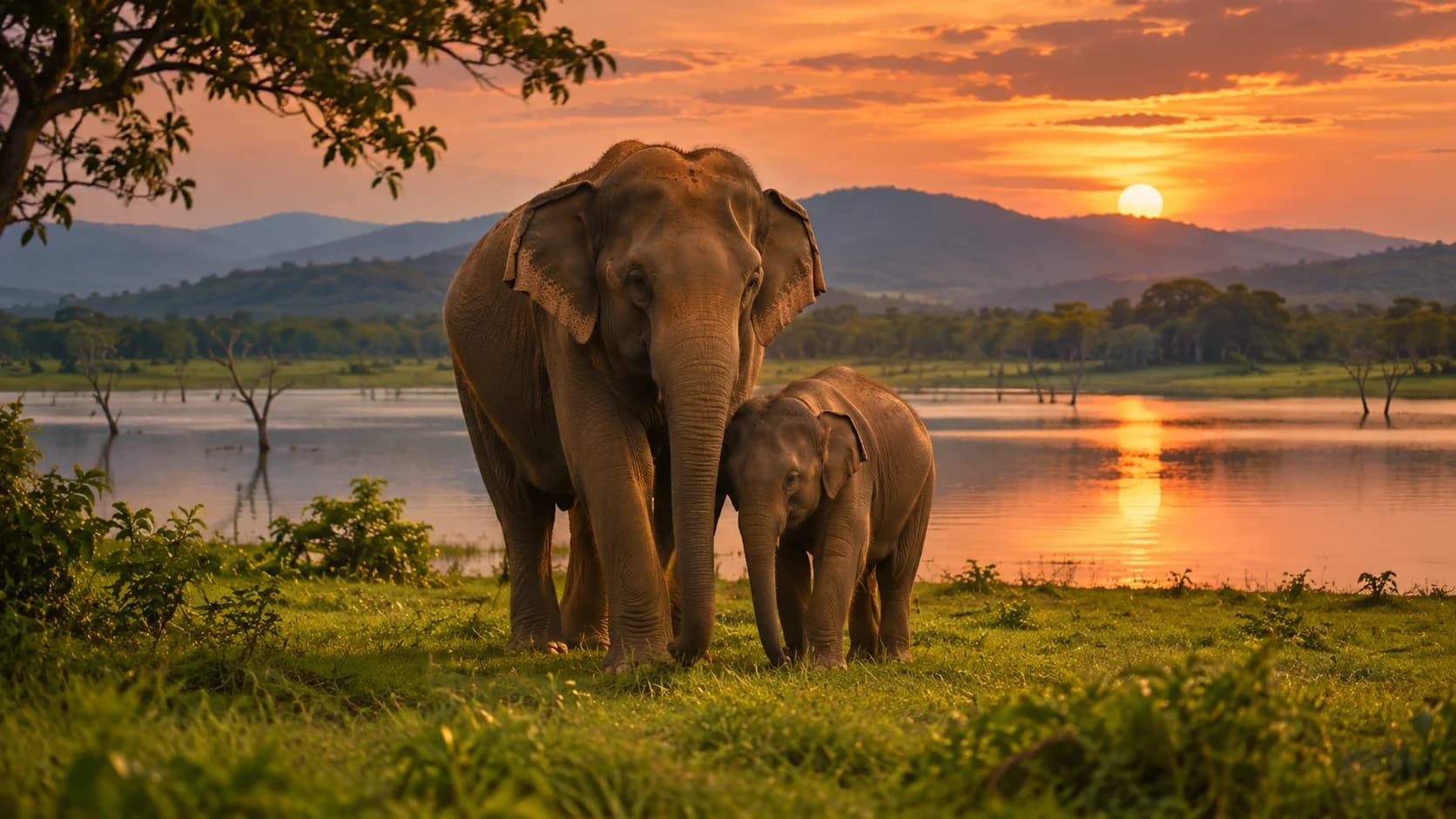
Udawalawe National Park is one of Sri Lanka's most reliable places to see wild elephants year-round. This guide covers when to go, how to reach the park, where to base yourself and what to expect on a jeep safari.
Udawalawe National Park sits in the dry zone of southern Sri Lanka, roughly 165 kilometres from Colombo. The park centres on the Udawalawe Reservoir and covers about 308 square kilometres of grassland, scrub jungle and wetlands. It was established in 1972 to protect the catchment area of the reservoir and to provide a sanctuary for animals displaced by the reservoir's construction. Today it is best known for its resident elephant population, which numbers several hundred individuals according to the Department of Wildlife Conservation.
Why go
Udawalawe offers one of the highest probabilities of seeing wild elephants in Sri Lanka, with herds often visible near the reservoir and on the open plains. The park's relatively open terrain makes wildlife easier to spot than in denser parks, and the lack of heavy tourist pressure compared to Yala means a quieter safari experience. Birdlife is also prolific, with endemic species such as Sri Lanka spurfowl and Sri Lanka junglefowl alongside raptors and waterbirds. For travellers wanting a straightforward half-day or full-day safari with a strong chance of elephant sightings, Udawalawe is a practical choice.
When to go
The park is open year-round, but the dry season from May to September generally offers the best visibility as animals congregate around the reservoir and remaining waterholes. The northeast monsoon brings rain from October to January, which can make tracks muddy and reduce visibility, though the landscape is greener and bird activity increases. March and April are hot and dry, with temperatures often exceeding 30°C. Early morning and late afternoon drives are cooler and coincide with peak animal activity regardless of season. Check the Department of Wildlife Conservation website for any temporary closures or weather advisories before you travel.
How to get there
Most visitors reach Udawalawe by road. From Colombo the drive takes around four to five hours via the Southern Expressway (E01) to the Pelmadulla exit, then continuing on the A18 and B427. From the hill country, the route from Ella or Haputale takes about two to three hours winding down through tea estates. From the south coast, places like Mirissa or Tangalle are roughly two hours away. Public buses run to Udawalawe town from major hubs including Colombo (Pettah), Ratnapura and Embilipitiya, but connections to the park entrance require a tuk-tuk or taxi. There is no railway station at Udawalawe; the nearest stations are at Matara or Beliatta on the coastal line, both requiring onward road travel. Hiring a private car with a driver is the most flexible option for combining Udawalawe with other destinations.
Getting around
Inside the park you must use a registered 4x4 safari jeep with a driver authorised by the Department of Wildlife Conservation. Private vehicles are not permitted on game drives. Jeeps can be arranged through your accommodation or at the park entrance, though pre-booking through your lodge is more reliable during peak periods. A standard half-day drive lasts about three to four hours; full-day drives include a picnic lunch and cover more ground. Drivers follow a network of dirt tracks; off-track driving is prohibited. There are no walking trails for visitors inside the core park area. The main entrance is at the 7th Mile Post on the Thanamalwila Road, where you pay entry fees and are assigned a tracker if available.
Things to do
The primary activity is a guided jeep safari. Morning drives typically start at 6:00 am and afternoon drives at 2:30 pm, aligning with animal movement patterns. Elephants are the main draw, but you may also see water buffalo, sambar deer, spotted deer, wild boar, jackal, crocodiles and occasionally leopard, though leopard sightings are far less frequent than in Yala. Birdwatchers should bring binoculars for raptors such as crested serpent eagle and changeable hawk-eagle, plus waterbirds around the reservoir. The Elephant Transit Home, run by the Department of Wildlife Conservation, lies just outside the park near the entrance. It rehabilitates orphaned elephant calves for release back into the wild. Visitors can watch the feeding sessions at 9:00 am, 12:00 pm, 3:00 pm and 6:00 pm from a viewing platform. This is an ethical alternative to elephant orphanages that allow direct contact. For a broader trip, consider how Udawalawe fits into a 2 week Sri Lanka itinerary with safari and beaches or a 7 day Sri Lanka itinerary covering culture, hills and coast.
Where to stay, by area
Accommodation clusters around three main zones. Near the park entrance (7th Mile Post / Udawalawe town) puts you closest for early morning gate entry. This area has a mix of guesthouses, mid-range lodges and a few larger resorts, most within five to ten minutes' drive of the ticket office. Staying here minimises pre-dawn travel and lets you walk to the Elephant Transit Home for feeding times. Along the Thanamalwila Road towards Embilipitiya you find a string of safari-oriented lodges and tented camps set back from the road, often with views over the park boundary or reservoir. These tend to be quieter and more nature-immersive, with a ten to twenty-minute drive to the gate. Embilipitiya town, about 15 kilometres north, offers a wider choice of budget hotels, restaurants and services, but adds twenty to thirty minutes each way to park access. If you plan multiple drives or want to visit the transit home on foot, the entrance zone is most convenient. For a quieter bush feel, the Thanamalwila Road lodges work well.
How long to stay
Two nights is the standard stay for most travellers, allowing one morning and one afternoon safari, plus a visit to the Elephant Transit Home. One night is possible if you arrive early and leave late, but you risk missing a drive if weather or logistics delay you. Three nights suits keen photographers or birders who want multiple drives across different sectors of the park, or those combining Udawalawe with a day trip to nearby attractions such as the Sankapala Raja Maha Viharaya rock temple or the Udawalawe Dam viewpoint. If you are comparing parks, read our Udawalawe vs Yala safari guide to decide which fits your route and priorities.
Practical tips
Entry fees for foreign nationals are set by the Department of Wildlife Conservation and vary by nationality; check the official DWC website for current rates. Fees are paid in Sri Lankan rupees (LKR) at the gate; card payment is not always reliable so carry cash. A half-day jeep hire typically costs LKR 12,000, 18,000 depending on the vehicle and negotiation, excluding park fees and tracker tip. Full-day hire is higher. Prices were last checked in early 2024 and may have changed. Tip your driver and tracker (LKR 1,000, 2,000 each per drive is customary) if they provide good spotting and information. Wear neutral-coloured clothing, a hat and sunscreen; mornings can be cool, afternoons hot. Bring water and snacks as there are no shops inside the park. Do not feed or approach animals; keep noise to a minimum. Flash photography is discouraged near elephants. Mobile signal is patchy inside the park. For health advice including vaccinations and malaria risk, consult the CDC Sri Lanka page and your travel clinic. UK nationals should review the UK Foreign Office travel advice before departure. Most visitors need an Electronic Travel Authorization; apply via the official ETA site. Respect local customs at any religious sites you visit en route; shoulders and knees should be covered. For packing guidance across Sri Lanka's varied climates, see our Sri Lanka packing list for heat, hills and rain. For budget planning across the trip, refer to our Sri Lanka trip cost guide.
Next step
Download the free Sri Lanka travel starter kit for a printable packing checklist, budget planner and itinerary templates to organise your Udawalawe safari and the rest of your trip.
Frequently asked questions
How is Yala National Park?
Yala National Park is Sri Lanka's most visited park, known for its high leopard density and diverse habitats including coastal lagoons, scrub jungle and rocky outcrops. It is busier than Udawalawe and sightings are never guaranteed.
How big is Yala National Park?
Yala National Park covers approximately 979 square kilometres across five blocks, though only Block 1 and sometimes Block 5 are open to the public for tourism.
Why is Yala National Park famous?
Yala is famous for having one of the world's highest concentrations of leopards, plus elephants, sloth bears, crocodiles and abundant birdlife, making it a premier safari destination in Sri Lanka.
Why is Yala National Park closed?
Yala's Block 1 typically closes for six to eight weeks each year from September to October for habitat recovery and to reduce animal stress during the peak dry season; exact dates are announced by the Department of Wildlife Conservation.
What is the difference between Udawalawe and Yala for safari?
Udawalawe is smaller, quieter and offers more reliable elephant sightings on open terrain, while Yala is larger, busier and better known for leopards; choose based on your target species and tolerance for crowds.
Facts in this guide were checked against official sources on the date shown. Rules and prices change, so confirm before you travel.
